Showing posts with label Ar-Rum. Show all posts

Friday, 18 April 2014

nescaya akan hilang bisanya


Surah An Nur :- 
Baca nescaya terhindar dari mimpi-mimpi buruk.
 

Surah An Nur Ayat 35 :- 
Baca setiap hari Jumaat sebelum solat Asar, nescaya disegani oleh orang ramai.
 

Surah Al Furqan :- 
Baca 3 kali dalam air dan percikkan dalam rumah, nescaya selamat dari gangguan binatang liar dan ular.
 

Surah Asy Syu'ara' Ayat 130 :- 
Baca 7 kali dengan senafas pada orang-orang yang digigit binatang bisa, nescaya akan hilang bisanya.
 

Surah An Naml :- 
Baca nescaya nikmat-nikmat Allah akan kekal kepadanya.
 

Surah Al Ankabut :- 
Nescaya demam sembuh dan juga terhindar dari gelisah.
 

Surah Ar Rum :- 
Baca nescaya Allah akan binasakan orang-orang yang hendak menzaliminya.
 

Surah Luqman :- 
Baca nescaya terhindar dari segala penyakit-penyakit perut.


sumber dari: virtualfriends.net/

Friday, 4 April 2014

Réfléchir aux versets du Coran


athee-croyant-intelligence


Le coran constitue la dernière révélation que les êtres humains ont reçu de la part de Dieu, il incombe donc à chaque individu d’étudier ce livre et de méditer sur son contenu , Dieu atteste que le Coran fut révélé afin que les gens réfléchissent à ses versets :
[Voici] un Livre béni que Nous avons fait descendre vers toi, afin qu’ils méditent sur ses versets et que les doués d’intelligence réfléchissent’ (Sourate Sâd, 29)
Dieu souligne l’importance de la réflexion. Ainsi, on retrouve souvent dans le Coran des phrases comme : "Ne réfléchissez-vous point ?" et "voilà des signes pour ceux qui réfléchissent". Les appels à la réflexion et les sujets de méditation sont illimités. Dieu invite les gens à méditer sur de nombreux sujets, tel l’ordre extraordinaire de l’univers, les êtres vivants sur terre, les systèmes parfaits de ces êtres vivants, les événements qu’il vit, les bienfaits que Dieu crée continuellement, les calamités envoyées aux incrédules, le paradis, l’enfer, l’éternité… Chaque sujet auquel nous réfléchissons nous confère une meilleure appréciation de l’omnipotence, la sagesse, la science, l’art et les autres attributs d’Allah.
Allah invite l’homme à réfléchir sur sa propre création
Et l’homme dit: "Une fois mort, me sortira-t-on vivant?" L’homme ne se rappelle-t-il pas qu’avant cela, c’est Nous qui l’avons créé, alors qu’il n’était rien? (Sourate Mariam, 66-67)
Allah invite les gens à réfléchir sur la création de l’univers.
Certes la création des cieux et de la terre, dans l’alternance de la nuit et du jour, dans le navire qui vogue en mer chargé de choses profitables aux gens, dans l’eau qu’Allah fait descendre du ciel, par laquelle Il rend la vie à la terre une fois morte et y répand des bêtes de toute espèce, dans la variation des vents, et dans les nuages soumis entre le ciel et la terre, en tout cela il y a des signes, pour un peuple qui raisonne. (Sourate Al-Baqarah, 164)
Allah invite les gens à réfléchir sur la nature temporaire de ce monde:
La vie présente est comparable à une eau que Nous faisons descendre du ciel et qui se mélange à la végétation de la terre dont se nourrissent les hommes et les bêtes. Puis lorsque la terre prend sa parure et s’embellit, et que ses habitants pensent qu’elle est à leur entière disposition, Notre Ordre lui vient, de nuit ou de jour, c’est alors que Nous la rendrons toute moissonnée, comme si elle n’avait pas été florissante la veille. Ainsi exposons-Nous les preuves pour des gens qui réfléchissent. (Sourate Yûnus, 24)
Allah invite les gens à réfléchir sur les bienfaits qu’ils possèdent:
Et c’est Lui qui a étendu la terre et y a placé montagnes et fleuves. Et de chaque espèce de fruits Il y établit deux éléments de couple. Il fait que la nuit couvre le jour. Voilà bien là des preuves pour des gens qui réfléchissent.
Et sur la terre il y a des parcelles voisines les unes des autres, des jardins [plantés] de vignes, et des céréales et des palmiers, en touffes ou espacés, arrosés de la même eau, cependant Nous rendons supérieurs les uns aux autres quant au goût. Voilà bien là des preuves pour des gens qui raisonnent.
(Sourate ar-Ra’d, 3-4)
Allah invite l’homme à réfléchir au fait que tout l’univers a été créé pour l’homme:
Et Il vous a assujetti tout ce qui est dans les cieux et sur la terre, le tout venant de Lui. Il y a là des signes pour des gens qui réfléchissent. (Sourate Al-Djathiya, 13)
D’elle, Il fait pousser pour vous, les cultures, les oliviers, les palmiers, les vignes et aussi toutes sortes de fruits. Voilà bien là une preuve pour des gens qui réfléchissent. Pour vous, Il a assujetti la nuit et le jour; le soleil et la lune. Et à Son ordre sont assujetties les étoiles. Voilà bien là des preuves pour des gens qui raisonnent. Ce qu’Il a créé pour vous sur la terre a des couleurs diverses. Voilà bien là une preuve pour des gens qui se rappellent. Et c’est Lui qui a assujetti la mer afin que vous en mangiez une chair fraîche, et que vous en retiriez des parures que vous portez. Et tu vois les bateaux fendre la mer avec bruit, pour que vous partiez en quête de Sa grâce et afin que vous soyez reconnaissants. Et Il a implanté des montagnes immobiles dans la terre afin qu’elle ne branle pas en vous emportant avec elle de même que des rivières et des sentiers, afin que vous vous guidiez, ainsi que des points de repère. Et au moyen des étoiles [les gens] se guident. Celui qui crée est-il semblable à celui qui ne crée rien? Ne vous souvenez-vous pas? (Sourate an-Nahl, 11-17)
Allah invite les gens à réfléchir sur eux-mêmes:
N’ont-ils pas médité en eux-mêmes? (Sourate ar-Rûm, 8)
Allah invite les gens à réfléchir au sujet de bonnes valeurs et actions:
Certes, Allah commande l’équité, la bienfaisance et l’assistance aux proches. Et Il interdit la turpitude, l’acte répréhensible et la rébellion. Il vous exhorte afin que vous vous souveniez. (Sourate an-Nahl, 90)
Ô vous qui croyez’ N’entrez pas dans des maisons autres que les vôtres avant de demander la permission [d'une façon délicate] et de saluer leurs habitants. Cela est meilleur pour vous. Peut-être vous souvenez-vous.
(Sourate an-Nûr, 27)
Allah invite les gens à réfléchir à l’Au-delà, à l’Heure, et au Jour du Jugement.
Et rappelle-toi Ibrâhîm, Ishâq et Ya’qûb? Nos serviteurs puissants et clairvoyants. Nous avons fait d’eux l’objet d’une distinction particulière: le rappel de l’au-delà. (Sourate Sâd, 45-46)
Qu’est-ce qu’ils attendent sinon que l’Heure leur vienne à l’improviste? Or ses signes avant-coureurs sont certes déjà venus. Et comment pourront-ils se rappeler quand elle leur viendra (à l’improviste)? (Sourate Muhammad, 18)
Allah invite l’homme à réfléchir au sujet des êtres animés qu’Il crée
[Et voilà] ce que ton Seigneur révéla aux abeilles: "Prenez des demeures dans les montagnes, les arbres, et les treillages que [les hommes] font. Puis mangez de toute espèce de fruits, et suivez les sentiers de votre Seigneur, rendus faciles pour vous. De leur ventre, sort une liqueur, aux couleurs variées, dans laquelle il y a une guérison pour les gens. Il y a vraiment là une preuve pour des gens qui réfléchissent. (Sourate an-Nahl, 68-69)
Allah invite l’homme à penser aux châtiments qu’il pourrait subir soudainement
Dis: "Informez-moi: si le châtiment d’Allah vous vient ou que vous vient l’Heure, ferez-vous appel à autre qu’Allah, si vous êtes véridiques? (Sourate al-An’âm, 40)
Dis: "Voyez-vous? Si Allah prenait votre ouïe et votre vue, et scellait vos cœurs, quelle divinité autre qu’Allah vous les rendrait? Regarde comment, à leur intention, Nous clarifions les preuves’ Pourtant ils s’en détournent. Dis: "Que vous en semble? Si le châtiment d’Allah vous venait à l’improviste ou au grand jour, qui seront détruits sinon les gens injustes? " (Sourate al-An’âm, 46-47)
Nous avons en effet, donné le Livre à Moïse, – après avoir fait périr les anciennes générations, – en tant que preuves illuminantes pour les gens, ainsi que guidée et miséricorde afin qu’ils se souviennent. (Sourate al-Qasas, 43)
En effet, nous avons fait périr des peuples semblables à vous. Y a-t-il quelqu’un pour s’en souvenir? (Sourate al-Qamar, 51)
Allah invite l’homme à réfléchir sur le Coran
Ne méditent-ils donc pas sur le Coran? S’il provenait d’un autre qu’Allah, ils y trouveraient certes maintes contradictions’ (Sourate an-Nisâ, 82)
[Voici] un Livre béni que Nous avons fait descendre vers toi, afin qu’ils méditent sur ses versets et que les doués d’intelligence réfléchissent’ (Sourate Sâd, 29)
Ah’ Non’ Ceci est vraiment un Rappel. Quiconque veut, qu’il se le rappelle. (Sourate al-Muddaththir, 54-55)
C’est ainsi que nous l’avons fait descendre un Coran en [langue] arabe, et Nous y avons multiplié les menaces, afin qu’ils deviennent pieux ou qu’il les incite à s’exhorter?
(Sourate Tâ Hâ, 113)
Tous les Messagers ont invité leurs peuples, qui ne raisonnaient pas bien, à réfléchir
Dis-leur: "Je ne vous dis pas que je détiens les trésors d’Allah, ni que je connais l’Inconnaissable, et je ne vous dis pas que je suis un ange. Je ne fais que suivre ce qui m’est révélé." Dis: "Est-ce que sont égaux l’aveugle et celui qui voit? Ne réfléchissez-vous donc pas? "
(Sourate al-An’âm, 50)
Son peuple disputa avec lui; mais il dit: "Allez-vous disputer avec moi au sujet d’Allah, alors qu’Il m’a guidé? Je n’ai pas peur des associés que vous Lui donnez. Je ne crains que ce que veut mon Seigneur. Mon Seigneur embrasse tout dans Sa science. Ne vous rappelez-vous donc pas? (Sourate al-An’âm, 80)


sumber dari: http://meniermustapha.wordpress.com/

Thursday, 27 February 2014

Other names of The Judgement Day


Holy Quran appoints the judgement day several different names other than just “judgement day”, most probably to draw attention to different reflections of such a day and create a deeper awareness around it.

Here is a list of these names:

1) Yawm Al-Khurooji  : Day of Coming Forth
The day when they will hear the (Awful) Cry in truth. That is the day of coming forth (from the graves). Qaf 50/42

2) Yawm Al-Baath: Day of Resurrection  Ar-Room – 30/56
But those to whom knowledge and faith are given will say: The truth is, ye have tarried, by Allah’s decree, until the Day of Resurrection. This is the Day of Resurrection, but ye used not to know. Ar-Room – 30/56

3)  Yawm Al-Jam: Day of Assembly
And thus We have inspired in thee a Lecture in Arabic, that thou mayst warn the mother-town and those around it, and mayst warn of a day of assembling whereof there is no doubt. A host will be in the Garden, and a host of them in the Flame. Ash-Shura 42/7

4)  Yawm Al Khulood: Day of Eternal Life
Enter ye therein in Peace and Security; this is a Day of Eternal Life!” Qaf – 50/34

5) Yawm Al-Azifatu: Approaching Day
The (Judgment) ever approaching draws nigh An-Najm 53/57

6) Yawm Daru Al-Qarar : Day of The Everlasting Home
O my people! This life of the present is nothing but (temporary) convenience: It is the Hereafter that is the Home that will last. Al-Ghafir 40/39

7) Yawm Al-Fasli: Day of Sorting Out
For the Day of Sorting out,
And what will explain to thee what is the Day of Sorting out? Al-Mursalat 77/13-14
Verily the Day of sorting out is the time appointed for all of them Ad- Dukhan 44/40

8) Yawm Al-Hasrat: Day of Distress
But warn them of the Day of Distress, when the matter will be determined: for (behold,) they are negligent and they do not believe! Maryam 19/39

9) Yawm Al-Mawood: The Promised Day
By the promised Day Al Burooj 85/2

10) Yawm Al-Taghabun: The Day of Mutual Disillusion
The day when He shall gather you unto the Day of Assembling, that will be a day of mutual disillusion. And whoso believeth in Allah and doeth right, He will remit from him his evil deeds and will bring him unto Gardens underneath which rivers flow, therein to abide for ever. That is the supreme triumph. – At-Taghabun 64/9

11) As-Saatu: The hour,
The Hour (of Judgment) is nigh, and the moon is cleft asunder. Al-Qamar 54/1

12) Al-Hâaqqa: The reality Al Haaqqa 69/1-3
The Sure Reality!
What is the Sure Reality?
And what will make thee realise what the Sure Reality is? Al Haaqqa 69/1-3

13) Al-Qaria:The Day of Noise and Clamour
The (Day) of Noise and Clamour
What is the (Day) of Noise and Clamour?
And what will explain to thee what the (Day) of Noise and Clamour is? Al Qaria 101-1-3


sumber dari: islamoformation.com

Friday, 3 January 2014

Take a Lesson from the Demise


landscape


  All through history, societies that have opposed Allah, his messengers and religion, have been destroyed by great disasters, in such a way as to leave no trace of them. The end of such societies must be a lesson for all people, to turn to Allah and fear His wrath.

Say: "Travel about the earth and see the final fate of the evildoers." (Surat an-Naml: 69)

Say: "Travel about the earth and see the final fate of the deniers." (Surat al-An'am: 11)


Say: "Travel about the earth and see the final fate of those before. Most of them were idolaters." (Surat ar-Rum: 42)

We destroyed the cities round aboud you and have variegated the signs that hopefully they will turn back. (Surat al- Ahqaf: 27)


sumber dari: harunyahya.com

AFTER THE UNIVERSE DIES


A graphic impression of a star becoming a supernova


Do they not see that Allah, Who created the heavens and Earth, has the power to create the like of them, and has appointed fixed terms for them of which there is no doubt? But the wrongdoers still spurn anything but unbelief. (Surat al-Isra', 99)

Do they not see that Allah—Who created the heavens and Earth and was not wearied by creating them—has the power to bring the dead to life? Yes indeed! He has power over all things. (Surat al-Ahqaf, 33)

On the Day Earth is changed to other than Earth, and the heavens likewise, and they parade before Allah, the One, the All-Conquering. (Surah Ibrahim, 48)

How can you reject Allah, when you were dead and then He gave you life, then He will make you die and then give you life again, then you will be returned to Him? (Surat al-Baqara, 28)

"You tarried in accordance with Allah's Decree until the Day of Resurrection. And this is the Day of Resurrection, but you did not know it." On that Day the excuses of those who did wrong will not help them, nor will they be able to appease Allah. (Surat ar-Rum, 56-57)


They swear by Allah with their most earnest oaths that He will not raise up those who die, when, on the contrary, it is a binding promise on Him; but most people do not know it. So that He can make clear to them the things they differed about, and so that those who did not believe will know that they were liars. (Surat an-Nahl, 38-39)

"If you were to obey a human being like yourselves, you would, in that case, definitely be the losers. Does he promise you that when you have died and become dust and bones that you will be brought forth again? What you have been promised is sheer nonsense! What is there but our life in this world? We die and we live, and we will not be raised again." (Surat al-Mu'minun, 34-37)


He makes likenesses of Us and forgets his own creation, saying: "Who will give life to bones when they are decayed?" Say: "He Who made them in the first place will bring them back to life. He has total knowledge of each created thing; He Who produces fire for you from green trees so that you use them to light your fires." Does He Who created the heavens and Earth not have the power to create the same again? Yes indeed! He is the Creator, the All-Knowing. His command when He desires a thing is just to say to it: "Be!" and it is. Glory be to Him Who has the Dominion of all things in His Hand. To Him you will be returned. (Surah Ya Sin, 78-83)

Among His Signs is that you see the earth laid bare, and then when We send down water on it, it quivers and swells. He Who gives it life is He Who gives life to the dead. Certainly He has power over all things. (Surah Fussilat, 39)

The Trumpet will be blown, and those in the heavens and those in the earth will all lose consciousness, except those Allah wills. Then it will be blown a second time, and at once they will be standing upright, looking on. (Surat az-Zumar, 68)

Say: "Allah gives you life, then causes you to die, and then will gather you together for the Day of Resurrection, about which there is no doubt. But most people do not know it." (Surat al-Jathiya, 26)


sumber dari: judgementday.org

Friday, 20 December 2013

arti baik dan buruk


http://lh6.ggpht.com/_nTdqT_yei8I/SwsSXjvsF9I/AAAAAAAAABg/kBF_xiGfV7k/ramadhan-sujud-1.jpg


Para filosof dan teolog sering membahas tentang arti baik dan buruk, serta tentang pencipta kelakuan tersebut, yakni apakah kelakuan itu merupakan hasil pilihan atau perbuatan manusia sendiri, ataukah berada di luar kemampuannya?

Tulisan ini tidak akan mengarungi samudera pemikiran yang dalam lagi sering menenggelamkan itu, namun kita dapat berkata bahwa secara nyata terlihat dan sekaligus kita akui bahwa terdapat manusia yang berkelakuan baik, dan juga sebaliknya. Ini berarti bahwa manusia memiliki kedua potensi tersebut. Terdapat sekian banyak ayat Al-Quran yang dipahami menguraikan hal hakikat ini, antara lain:


Maka Kami telah memberi petunjuk (kepada)-nya (manusia) dua jalan mendaki (baik dan buruk) 
(QS Al-Balad [90]: ayat 10).
...dan (demi) jiwa serta penyempurnaaaan ciptaannya, maka Allah mengilhami (jiwa manusia) kedurhakaan dan ketakwaan (QS Asy-Syams [91]: ayat 7-8).

Walaupun kedua potensi ini terdapat dalam diri manusia, namun ditemukan isyarat-isyarat dalam Al-Quran bahwa kebajikan lebih dahulu menghiasi diri manusia daripada kejahatan, dan bahwa manusia pada dasarnya cenderung kepada kebajikan.

Al-Quran surat Thaha (20): 121 menguraikan bahwa Iblis menggoda Adam sehingga, ... durhakalah Adam kepada Tuhannya dan sesatlah ia.
Redaksi ini menunjukkan bahwa sebelum digoda oleh Iblis, Adam tidak durhaka, dalam arti, tidak melakukan sesuatu yang buruk, dan bahwa akibat godaan itu, ia menjadi tersesat. Walaupun kemudian Adam bertobat kepada Tuhan, sehingga ia kembali lagi pada kesuciannya.

Kecenderungan manusia kepada kebaikan terbukti dari persamaan konsep-konsep pokok moral pada setiap peradaban dan zaman. Perbedaan --jika terjadi-- terletak pada bentuk, penerapan, atau pengertian yang tidak sempurna terhadap konsep-konsep moral, yang disebut ma'ruf dalam bahasa Al-Quran. Tidak ada peradaban yang menganggap baik kebohongan, penipuan, atau keangkuhan. Pun tidak ada manusia yang menilai bahwa penghormatan kepada kedua orang-tua adalah buruk. Tetapi, bagaimana seharusnya bentuk penghormatan itu? Boleh jadi cara penghormatan kepada keduanya berbeda-beda antara satu masyarakat pada generasi tertentu dengan masyarakat pada generasi yang lain. Perbedaan-perbedaan itu selama dinilai baik oleh masyarakat dan masih dalam kerangka prinsip umum, maka ia tetap dinilai baik (ma'ruf).

Kembali kepada persoalan kecenderungan manusia terhadap kebaikan, atau pandangan tentang kesucian manusia sejak lahir, hadis-hadis Nabi saw pun antara lain menginformasikannya: "Setiap anak dilahirkan dalam keadaan suci (fithrah), hanya saja kedua orang-tuanya (lingkungannya) yang menjadikan dia Yahudi, Nasrani, atau Majusi." (HR Bukhari).

Seorang sahabat Nabi saw bernama Wabishah bin Ma'bad berkunjung kepada Nabi saw, lalu beliau menyapanya dengan bersabda: "Engkau datang menanyakan kebaikan?" "Benar, wahai Rasul," jawab Wabishah. "Tanyailah hatimu! "Kebajikan adalah sesuatu yang tenang terhadap jiwa, dan yang tenteram terhadap hati, sedangkan dosa adalah yang mengacaukan hati dan membimbangkan dada, walaupun setelah orang memberimu fatwa." (HR Ahmad dan Ad-Darimi).

Dengan demikian menjadi amat wajar jika ditemukan ayat-ayat Al-Quran yang mengisyaratkan bahwa manusia pada hakikatnya --setidaknya pada awal masa perkembangan-- tidak akan sulit melakukan kebajikan, berbeda halnya dengan melakukan keburukan.

Salah satu frase dalam surat Al-Baqarah ayat 286 menyatakan, untuk manusia ganjaran bagi perbuatan baik yang dilakukannya dan sanksi bagi perbuatan (buruk) yang dilakukannya.
Oleh beberapa ulama, frase ini kerap dijadikan sebagai bukti apa yang disebut di atas. Dalam terjemahan di atas terlihat bahwa kalimat "yang dilakukan" terulang dua kali: yang pertama adalah terjemahan dari kata kasabat dan kedua terjemahan dan kata iktasabat.

Syaikh Muhammad Abduh dalam tafsir Al-Manar menyatakan kata iktasabat, dan semua kata yang berpatron demikian, memberi arti adanya semacam upaya sungguh-sungguh dari pelakunya, berbeda dengan kasabat yang berarti dilakukan dengan mudah tanpa pemaksaan. Dalam ayat di atas, perbuatan-perbuatan manusia yang buruk dinyatakan dengan iktasabat, sedangkan perbuatan yang baik dengan kasabat. Ini menandakan bahwa fitrah manusia pada dasarnya cenderung kepada kebaikan, sehingga dapat melakukan kebaikan dengan mudah. Berbeda halnya dengan keburukan yang harus dilakukannya dengan susah payah dan keterpaksaan (ini tentu pada saat fitrah manusia masih berada dalam kesuciannya).

Potensi yang dimiliki manusia untuk melakukan kebaikan dan keburukan, serta kecenderungannya yang mendasar kepada kebaikan, seharusnya mengantarkan manusia memperkenankan perintah Allah (agama-Nya) yang dinyatakan-Nya sesuai dengan fithrah (asal kejadian manusia). Dalam Al-Quran surat Ar-Rum (30): 30 dinyatakan,


Maka hadapkanlah wajahmu dengan lurus kepada agama (Allah). Itulah fithrah Allah yang telah menciptakan manusia menurut fithrah itu. ( Ar-Rum (30): 30)

Di sisi lain, karena kebajikan merupakan pilihan dasar manusia, kelak di hari kemudian pada saat pertanggungjawaban, sang manusia dihadapkan kepada dirinya sendiri:


Bacalah kitab amalmu (catatan perbuatanmu); cukuplah engkau sendiri yang melakukan perhitungan atas dirimu (QS Al-Isra' [17]: 14).


sumber dari: p2k-mm-usb-bandung.konsultan-pendidikan-tinggi.biz

Sunday, 15 December 2013

Walimatul 'Ursy


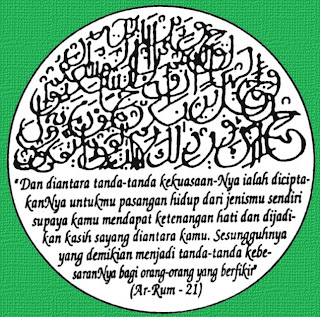
"Dan diantara tanda-tanda kekuasaan-Nya diciptakan-Nya untukmu pasangan hidup dari jenismu sendiri supaya kamu mendapat ketenangan hati dan dijadikan-Nya kasih sayang di antara kamu. Sesungguhnya yang demikian itu menjadi tanda-tanda kebesaran-Nya bagi orang-orang yang berpikir." [Ar- Rum:21]


sumber dari: weddingwire.com

Perjanjian Arzanah Ar-Rum


 Pasca kekalahan Dinasti Ottoman dari Iran, pemerintah Ottoman meminta damai dengan Iran yang berujung pada penandantanganan perjanjian Arzanah ar-Rum pada tanggal 19 Dzulhijjah. Penandatanganan pernjanjian itu dihadiri oleh wakil-wakil kedua negara. Kedua pihak menyepakati dan menandatangani 7 butir perjanjian Arzanah ar-Rum.

Sesuai dengan perjanjian ini, pemerintah Iran harus mengembalikan daerah yang sebelum ini berhasil dikuasainya. Sementara pemerintah Ottoman berjanji tidak akan mengganggu para peziarah Iran. Dinasti Ottoman juga mengakui kepemilikan Iran atas pelabuhan Khorramshahr, pulau Khizr dan pesisir sebelah kiri dari sungai Arvand dan kapal-kapal Iran berhak melewati bagian kiri sungai ini.


Kesepakatan lain dari perjanjian ini terkait adanya wakil dan duta yang ditempatkan di ibukota kedua negara.


sumber dari: indonesian.irib.ir

dan al-Quran itu bukanlah senda gurauan


"Apabila langit terbelah. dan patuh kepada Tuhannya, dan sudah semestinya patuh. dan apabila bumi diratakan. dan memuntahkan apa yang ada di dalamnya dan menjadi kosong. dan patuh kepada Tuhannya dan semestinya patuh."  
al-Insyiqaq : 1-5


"Telah nampak kerosakan di darat and di laut disebabkan kerana perbuatan tangan manusia; Allah mengkehendaki agar mereka merasakan sebahagian dari (akibat) perbuatan mereka, agar mereka kembali ke jalan yang benar"
 Ar- Rum : 41


"Dan Kami tidak membinasakan suatu negeri, melainkan sudah ada ketentuan yang ditetapkan baginya"
 Al- Hijr : 4


sumber dari: andishoot.blogspot.com

Memori Hujan


memori hujan


Hujan menyelinapkan kegelapan, merangkak perlahan lalu memeluk seluruh ruang memori menjadi hitam putih. Waktu dipaksa memakai jubah masa lampau. lengkap sudah untuk memutar ribuan slide memori.
doa menjadi ‘original soundtrack’ yang mendampingi riak hujan, alih-alih besar, ukurannya hanya beberapa senti, butiran kecil yang entah bagaimana berupa bulir yang terjun bebas ke tanah yang lelah, menerjunkan diri dengan teratur serta dengan kecepatan tertentu , ia melalui proses yang cukup panjang, dan ia pun bersabar. itu engkau hujan…

hujan merekam setiap jejak kekesalan bahkan kebahagiaan, ia turut mendengar lantunan syukur dan kufur, ia berteman denga petir dan guntur yang amatir. mereka adalah tiga sekawan berikut dengan awan gelap. mereka seolah mengkudeta matahari agar tidak sombong, karena matahari mendapat gelar ‘super planet’ di alam semesta. Pesan pun sampai kini.

Hujan selalu ada cerita tentangmu.
“aku tak bisa menyentuh matahari, namun aku bisa menyentuhmu, Hujan…”
satu-satunya benda langit yang dapat kusentuh…
Titipan cinta dan berkah terbaik dari Allah.


Allah, dialah yang mengirimkan angin, lalu angin itu menggerakkan awan dan Allah membentangkannya di langit menurut yang di kehendakinya, dan menjadikannya bergumpal-gumpal: lalu kamu lihat hujan keluar dari celah-celahnya, maka apabila hujan itu turun mengenai hamba-hambanya yang di kehendakinya, tiba-tiba mereka menjadi gembira.” (QS. Ar-Rum, (40):48)


sumber dari: hartakata.wordpress.com

as a new UNESCO World Heritage Site


On 25th June, 2011 Wadi Rum was inscribed as a new UNESCO World Heritage Site, making it Jordan’s fourth World Heritage site after Petra, Qusayr Amra and Um Ar-Rassas. The USAID Jordan Tourism Development Project is pleased to have partnered with the Government of Jordan to reach this internationally-acclaimed recognition, which is a great honor for Jordan and all Jordanians.
 
“This win is considered a recognition for Jordan and its heritage, and will have a great impact on the country’s tourism sector,” said Minister of Tourism and Antiquities, H.E. Dr. Haifa Abu Ghazaleh.
 

“We are pleased and honored by the UNESCO inscription. Wadi Rum is unique in the world in terms of its geological morphology and the rock art inscriptions that can be found through the area,” said H.E. Issa Ayoub, Chief Commissioner of the Aqaba Special Economic Zone Authority (ASEZA), the custodian of the site. He added, “Now that the Wadi Rum Protect Area has been inscribed, our duty is to present it to the world in a manner fit for its special global status.”


sumber dari: siyaha.org

Riba Dalam Al Quran


Kata riba dalam Alquran ditemukan sebanyak tujuh kali, yaitu pada surah Al-Baqarah ayat 275, 276, 278, dan 279, surah Ali Imran ayat 130, surah An-Nisa ayat 161, surah Ar-Rum ayat 39. Perlu diketahui bahwa larangan riba dalam Alquran tidak turun sekaligus, melainkan secara bertahap, yakni dalam empat tahap;

Tahap Pertama ar-Rum ayat 39
Ayat ini turun di Mekah, tidak mengharamkan secara jelas, hanya berupa penolakan terhadap anggapan bahwa pinjaman riba yang pada zahirnya seolah-olah menolong mereka yang memerlukan sebagai perbuatan taqarrub kepada Allah.

Tahap kedua an-Nisaa’ ayat 160-161
Ayat ini turun di Madinah sebelum tahun ke-3 hijriah. Ayat ini pun belum secara tegas mengharamkan riba, namun memberikan gambaran yang buruk sebagai ancaman yang keras terhadap orang Yahudi yang memakan riba.

Tahap ketiga Ali Imran ayat 130
Ayat ini turun di Madinah pada tahun ke-3 hijriah, untuk memberikan gambaran bahwa pengambilan riba dengan tingkat yang cukup tinggi merupakan fenomena yang banyak dipraktikan pada masa tersebut.

Tahap Akhir al-Baqarah ayat 278-279

Ayat ini turun di Madinah  pada tahun ke-9. Ayat ini dengan jelas dan tegas mengharamkan riba dalam jenis apapun.


sumber dari: sinergikalam.wordpress.com

Pengadaian Syariah


sumber dari: pegadaiansyariahpaluplaza.blogspot.com

Jemputan untuk meraikan


"And among His Signs is this, that He created for you wives from among yourselves, that you may find repose in them, and He has put between you affection and mercy. Verily, in that are indeed signs for a people who reflect" Ar Rum : 21

"Our lord, grant us wives and offspring who will be the apples of our eyes and guide us to be models for the righteous" Al Furqan 25 : 74


sumber dari: nuruldiyana.blogspot.com

Dia menciptakan untukmu isteri-isteri dari jenismu sendiri


"Dan di antara tanda-tanda kekuasaan-Nya ialah Dia menciptakan untukmu isteri-isteri dari jenismu sendiri, supaya kamu cenderung dan merasa tenteram kepadanya, dan dijadikan-Nya di antaramu rasa kasih dan sayang. Sesungguhnya pada yang demikian itu benar-benar terdapat tanda-tanda bagi kaum yang berpikir"


sumber dari: tiska-and-sherlie-wedding.blogspot.com

Happy Chinese New Year!


- Islam is not a race, it is a religion -


Assalamualaikum wrt wbt (Peace be upon you)

All praises to our God, The One and only. He is The Eternal, The Absolute. He begets not, nor is He begotten. And there is none like unto Him.

For this festive season, I'm wishing you very prosperous and happiest Chinese New Year celebrating with your loved ones. Happy Chinese New Year!. This is a special entry for my Chinese friend, of what was stated in holy Quran regarding our differences. Hope you enjoy it!.

﴿وَمِنْ ءَايَـتِهِ خَلْقُ السَّمَـوَتِ وَالاٌّرْضِ وَاخْتِلَـفُ أَلْسِنَتِكُمْ وَأَلْوَنِكُمْ إِنَّ فِى ذلِكَ لأَيَـتٍ لِّلْعَـلَمِينَ - وَمِنْ ءايَـتِهِ مَنَامُكُم بِالَّيْلِ وَالنَّهَارِ وَابْتِغَآؤُكُمْ مِّن فَضْلِهِ إِنَّ فِى ذَلِكَ لاّيَاتٍ لِّقَوْمٍ يَسْمَعُونَ ﴾
And among His signs is the creation of the heavens and the earth, and the difference of your languages and colors. Verily, in that are indeed signs for men of sound knowledge. - And among His signs is your sleep by night and by day, and your seeking His bounty. Verily, in that are indeed signs for a people who listen. (Ar-Rum 30:22-23)
Allah said:

﴿وَمِنْ ءَايَـتِهِ﴾
(And among His signs) 
indicating His magnificent power.

﴿خَلَقَ السَّمَـوَتِ وَالأَرْضَ﴾
(is the creation of the heavens and the earth,) 
The heavens with their vast height and brightness and beauty of the stars and planets, and the earth with its density and its mountains, valleys, seas, plains, animals and trees.

﴿وَاخْتِلَـفُ أَلْسِنَتِكُمْ﴾
(and the difference of your languages) 
So, we see that some speak Arabic, and the Tatars have their own language, as do the Georgians, Romans, Franks, Berbers, Tou Couleurs (of Sudan), Ethiopians, Indians, Persians, Slavs, Khazars, Armenians, Kurds and others. Only Allah knows the variety of languages spoken among the sons of Adam. And the difference of their colors mentioned here refers to their appearance, for all the people of this world, from the time that Allah created Adam, and until the Hour begins, each of them has two eyes, two eyebrows, a nose, a forehead, a mouth and two cheeks, but none of them looks like another; there is bound to be some difference in posture, appearance and speech, whether it is apparent or is hidden and can only be noticed with careful observation. Each face has its own characteristics and does not look like another; even if there was a group of people who looked alike, having a beautiful or ugly characteristic in common, there would still be a difference between one person and the next.

﴿إِنَّ فِى ذلِكَ لأَيَـتٍ لِّلْعَـلَمِينَ﴾
(Verily, in that are indeed signs for men of sound knowledge.)
﴿وَمِنْ ءايَـتِهِ مَنَامُكُم بِالَّيْلِ وَالنَّهَارِ وَابْتِغَآؤُكُمْ مِّن فَضْلِهِ﴾
(And among His signs is your sleep by night and by day, and your seeking of His bounty.) 
Among His signs is the cycle of sleep that He has created during the night and the day, when people are able to cease moving and rest, so that their tiredness and exhaustion will go away. And He has enabled you to seek to earn a living and to travel about during the day, this is the opposite of sleep.

﴿إِنَّ فِى ذلِكَ لآيَـتٍ لِّقَوْمٍ يَسْمَعُونَ﴾
(Verily, in that are indeed signs for a people who listen.) 
meaning, understand.

Regards,
I'm A Muslim.


sumber dari: azmihisam.blogspot.com

Ayat Al Qur’an yang biasa disertakan dalam undangan


kata-kata mutiara di undangan


Berhubung kita masih di Bulan Ramadhan, Dalam malam yang penuh berkah ini Kita akan membahas tentang Ayat Al qur'an. Namun Saya disini bukan memberikan penjelasan tentang Tajwid atau Tafsir Al-quran, melainkan saya hanya memberikan sebuah artikel tentang ayat Al Qur’an yang biasa disertakan dalam undangan pernikahan.

Dalam membuat / mendesain undangan biasanya yang wajib disertakan adalah nama kedua mempelai berikut nama orang tua / keluarganya, waktu pelaksanaan pernikahan dan alamatnya, denah tempat berlangsungnya acara dan yang tidak kalah pentingnya juga adalah kata-kata mutiara yang bisa diambil dari ayat-ayat Alqur'an,  hadist, puisi-puisi karangan pujangga Islam.


Jika Sobat ingin menyertakan kata-kata mutiara di undangan, setidaknya kedua mempelai sudah mempunyai bayangan / rancangan sendiri tentang kata-kata tersebut. Jika belum, maka carilah sendiri kata-katanya. Jika mempelai tersebut beragama Islam biasanya menggunakan ayat-ayat Al Qur’an, hadist, puisi-puisi karangan pujangga Islam.

Berikut ini beberapa ayat Al Qur’an yang biasa disertakan dalam undangan pernikahan :


Qs. Ar. Ruum ayat 21 “Dan di antara tanda-tanda kekuasaan-Nya ialah Dia menciptakan untukmu isteri-isteri dari jenismu sendiri, supaya kamu cenderung dan merasa tenteram kepadanya, dan dijadikan-Nya di antaramu rasa kasih dan sayang. Sesungguhnya pada yang demikian itu benar-benar terdapat tanda-tanda bagi kaum yang berpikir.” 


sumber dari: aziscs1.com

Saturday, 19 October 2013

Friday, 2 August 2013

Dari Hati Untuk Hati


Ya ALLAH, kurniakanlah kepadaku hati seperti ini...

Hati Yang Celik
Firman Allah,maksudnya : "Dan engkau tidak akan dapat memberi petunjuk kepada orang-orang yang buta (mata hatinya) dari kesesatannya.Dan engkau memperdengarkan (petunjuk Tuhan) kecuali kepada orang-orang yang beriman dengan ayat-ayat Kami, maka mereka itulah orang-orang yang berserah diri (kepada Kami)." 
(Surah ar-Rum 30:53)

Hati yang Sedar


Firman Allah,maksudnya : "Sesungguhnya (keterangan-keterangan dan peristiwa-peristiwa) yang tersebut itu,tidak syak lagi mengandungi pengajaran bagi sesiapa yang mempunyai hati (yang sedar), atau yang menggunakan pendengarannya bersungguh-sungguh (kepada pengajaran itu) dengan menumpukan hati dan fikiran kepadanya." 

(Surah Qaf 50:37)

Hati yang Bersih

Firman Allah,maksudnya : "Sesungguhnya berjayalah orang-orang yang menjadikan dirinya-yang sedia bersih-bertambah bersih (dengan iman dan amal kebajikan)." 

(Surah Asy-Syams 91:9)

Hati yang Lurus


Firman Allah,maksudnya : "(Mereka berdoa dengan berkata): 'Wahai Tuhan kami! Janganlah Engkau memesongkan hati kami sesudah Engkau beri petunjuk kepada kami, kurniakanlah kepada kami limpah rahmat dari sisi-Mu; sesungguhnya Engkau jualah Tuhan yang melimpah-limpah pemberian-Nya." 

(Surah Ali 'Imran 3:8)

...dan KAU peliharalah daripadaku hati ini..

Hati yang Keras
Firman Allah,maksudnya : "Kemudian setelah itu hatimu menjadi keras, sehingga (hatimu) seperti batu, bahkan lebih keras. Padahal batu-batu itu pasti ada sungai-sungai yang (airnya) memancar daripadanya. Adapula yang terbelah lalu keluarlah mata air daripadanya. Dan ada pula yang meluncur jatuh kerana takut kepada Allah.."
(Surah al-Baqarah 2:74)

Hati yang Terhijab (tertutup)


Firman Allah,maksudnya: "Dan antara mereka ada yang mempendengarkan kepadamu (al-Quran), padahal Kami telah jadikan tutupan berlapis-lapis atas hati mereka, yang menghalang mereka daripada memahaminya,dan Kami jadikan pada telinga mereka penyumbat (yang menjadikan mereka pekak)." 

(Surah al-An'am 6:25)


sumber dari: firdausnurul.blogspot.com

How can sins change our lives?


How can sins change our lives? What are the effects of sins on our well-being? Imam Ibn Al-Qayyim Al-Jawziyah explains to us these effects in his well-known book Al-Jawab Al-Kafi:
  • Prevention of knowledge: Knowledge is a light which Allah throws into the heart and disobedience extinguishes this light.
Imam Ash-Shafi`i said: “I complained to Wakee` about the weakness of my memory, so he ordered me to abandon disobedience and informed me that knowledge is light. He said that the light of Allah is not given to the disobedient.”
  • Prevention of sustenance: Just as righteousness brings about sustenance, the abandonment of righteousness causes poverty. There is nothing which can bring about sustenance like the abandonment of sins.
  • Prevention of obedience (to Allah): If there was no other punishment for sin except that it prevents one from obeying Allah then this would be sufficient.
  • Disobedience weakens the heart : The fact that it weakens the heart is clear. Disobedience continues to weaken the heart until its life ceases completely.
  • Disobedience reduces one's lifespan and destroys any blessings: Just as righteousness increases one’s lifespan, sinning reduces it.
  • Legacy of the cursed: Every type of disobedience is the legacy of a nation from among those which Allah destroyed. Sodomy is a legacy of the people of Lot, taking more than one's due right and giving what is less is a legacy of the people of Shu`aib, spreading mischief and corruption is a legacy of the people of Pharaoh and pride, including arrogance and tyranny, is a legacy of the people of Hud. So the disobedient one is somehow a part of those nations who were the enemies of Allah.
  • Disobedience is a cause of the servant being held in contempt by his Lord: Al-Hasan Al-Basri said: “They became contemptible in (His sight) so they disobeyed Him. If they were honorable (in His sight) He would have protected them.”
  • Effect of sins on others: The ill-effects of the sinner fall upon those around him as well as the animals as a result of which they are touched by harm.
  • Living in sin: The servant continues to commit sins until they become very easy for him and seem insignificant in his heart and this is a sure sign of destruction. Every time a sin becomes insignificant in the sight of the servant it becomes great in the sight of Allah.
  • Disobedience brings humiliation and lowliness: Every aspect of honor lies in the obedience of Allah. Ibn Al-Mubarak said: “I have seen sins kill the hearts. And humiliation is inherited by their continuity. The abandonment of sins gives life to the hearts. And the prevention of your soul is better for it.”
  • Disobedience corrupts the intellect: The intellect has light and disobedience extinguishes this light. When the light of the intellect is extinguished it becomes weak and deficient.
  • Sealing of the heart: When disobedience increases, the servant’s heart becomes sealed so that he becomes of those who are heedless. The Exalted said: [But no! A stain has been left on their hearts on account of what they used to earn (that is, their actions)] (Al-Mutaffifin 83: 14).
  • Sins cause various types of corruption to occur in the land: Corruption of the water, the air, the plants, the fruit, and the dwelling places. The Exalted said: [Mischief has appeared on the land and the sea on account of what the hands of men have earned; that He may give them a taste of some of (the actions) they have done, in order that they may return] (Ar-Rum 30: 41).
  • Disappearance of modesty: Modesty is the essence of the life of the heart and is the basis of every good. Its disappearance is the disappearance of all that is good. The Prophet (peace and blessings be upon him) said:“Modesty is goodness, all of it.”
  • Sins weaken and reduce the magnification of Allah the Almighty in the heart of the servant.
  • Sins are the cause of Allah forgetting His servant: Sinning also causes Allah to abandon him and leave him to fend for himself with his soul and his Satan and in this is destruction from which no deliverance can be hoped for.
  • Being removed from the realm of benevolence: When a person’s sins, benevolence is removed from his heart. When benevolence fills the heart it prevents it from disobedience.
  • Disobedience causes the favors (of Allah) to cease and makes His revenge lawful: No blessing ceases to reach a servant except because of a sin, and no retribution is made lawful upon him except because of a sin. Ali ibn Abi Talib (may Allah be pleased with him) said: “No trial has descended except due to a sin and it (the trial) is not repelled except by repentance.”


sumber dari: tazkiyatips.blogspot.com